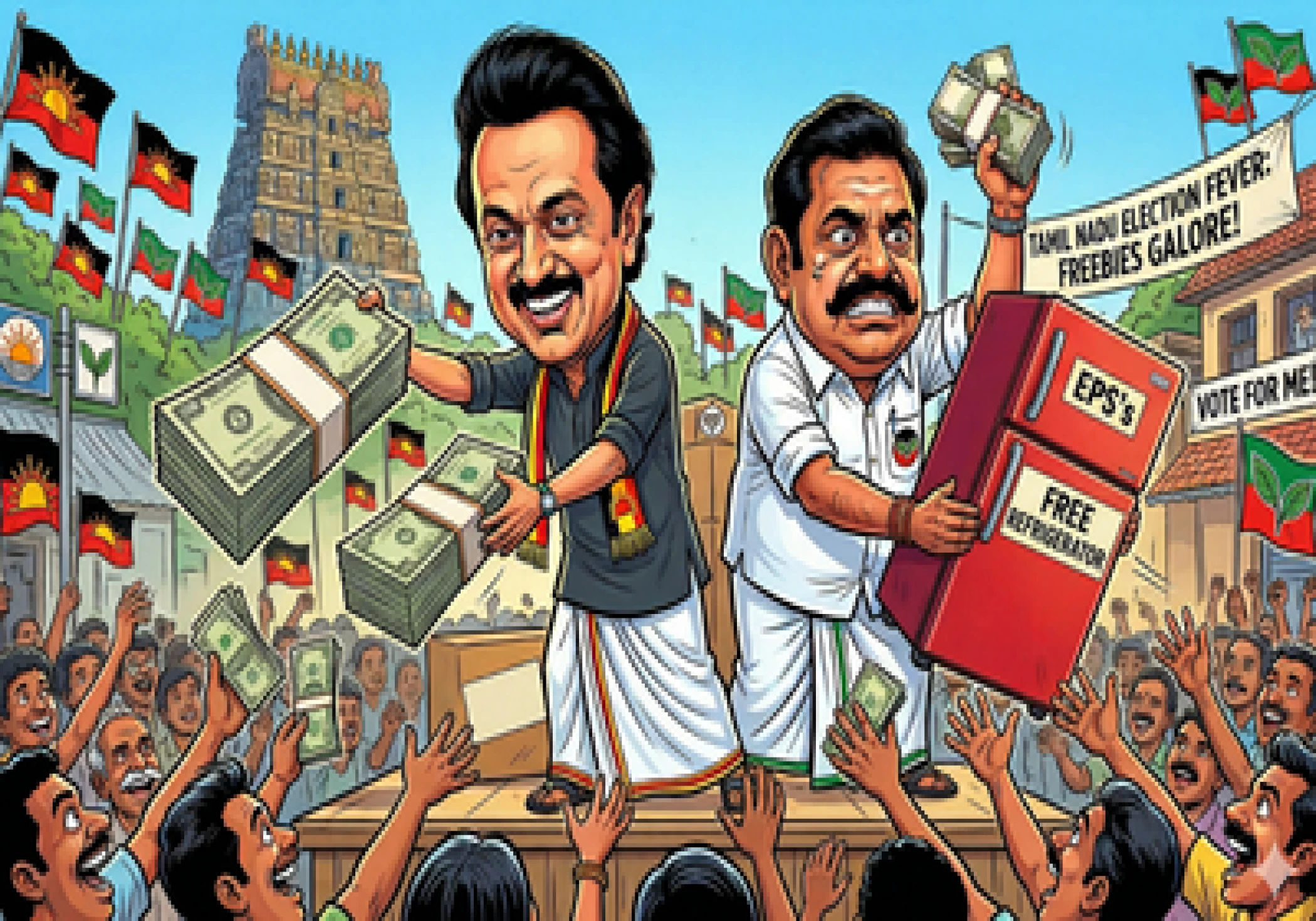
Tamil Nadu has long been at the forefront of welfare-driven politics in India. What began as a genuine attempt to uplift marginalized communities gradually evolved into a competitive culture of offering freebies to win electoral support.
Over the decades, this model has influenced political strategies far beyond the state, shaping a nationwide trend often referred to as the “freebies race.”
The roots of this phenomenon can be traced back to the late 20th century, when political parties in Tamil Nadu introduced subsidized food, free school supplies, and other welfare measures. These initiatives were initially designed to address poverty and improve social indicators such as education and nutrition.
However, as elections became more competitive, the scope of these benefits expanded significantly.
Successive governments began offering consumer goods such as televisions, mixers, grinders, and even laptops. These schemes, while popular among voters, blurred the line between welfare and populism.
Political parties increasingly used such promises as key campaign strategies, turning elections into contests of who could offer more.